Sunday, May 2, 2010

MAC Week 4 Comment-Jennifer Kubeczko

Jennifer said:

Benjamin Zander’s Art of Possibility has filled me with enthusiasm and new vision for being a quality leader. He has this to say in Chapter 10: “We often use reward and punishment to regulate accountability – the carrot and the stick… Apportioning blame works well enough to keep order in a relatively homogeneous society that boasts commonly accepted values and where everyone is enrolled in playing his part. It appeals to our instinctive sense of fairness. However, its effectiveness is likely to be circumscribed in communities of divergent cultures and widely varied resources.”

Wow. WOW. So that’s perhaps why I loved living in Japan so much. It was ordered. I knew my role, and we all worked together, “enrolled” in our efforts to support the community and the country by succeeding in our places. America is not homogeneous. Not even close. Were we ever? That’s a good research topic. But, I have strayed. Back to the reading: Instead of being a piece of a game such as chess, Zander says to be the board itself, the “framework for the game of life around you.” (p. 146) Yes! Now being the board gives you the “power to transform your experience of any unwanted condition into one with which you care to live.” Keep in mind he says “your experience and not the condition itself.”

The action of the game, the point is that you now make room for “all the possible moves.”

Think on THAT people.

I replied:

I AM thinking on that! I loved reading this chapter probably more than any others. The idea that instead of wallowing in our own self pity and lamenting the things that happen to us, we assume a position of power where we control the things that happen in and around us, or at least how we respond to them.

I love that you mention how this attitude is pervasive in Japan, but absent from our culture here in America. I think we’re seriously lacking boards in this country and having more people choosing the be them will make a huge difference in our cultures, and our schools

MAC Week 4 Comment-Erin Lodes

Erin wrote:
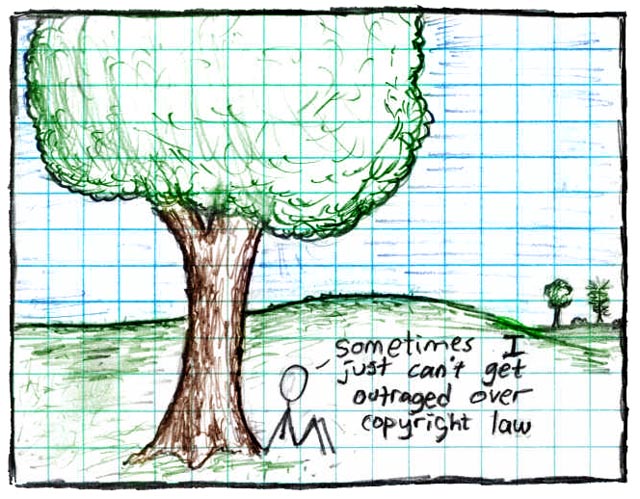
The controversy surrounding the Obama hope poster is pretty interesting - there seems to be no real argument that the artist's actions are legit. He says in his interview that he found the image online and used it. What's silly is that had he asked the photographer if he could use the photo, there's a decent change he would have said yes. How many amateurs wouldn't? When someone wants to use your work its a compliment, and many people are excited to contribute to the greater artistic community. The illustrator and photographer would have been co-artists of the poster.

Because he did NOT ask permission, a silly situation is created. Both parties are trying to sue the other on loose grounds. It's not fair that the artist claims full credit for an image that is based on someone's artistic photo. It's similarly silly that the artist, when blamed decided to "sue back" rather than apologize and ask permission, which could have a far better result.

I've ended up teaching my students a lot about copyright, creative commons, and fair use at school this year. It's a necesarry addition to my music technology class, since the students manipulate music and images every day, and maintain their own websites. The hardest point to make with them is based around OTHER people mis-labeling copyright. For instance, all of these images are shared under creative commons copyright on flickrcc.bluemountains.net:


It's hard to convince my kids that these images are NOT fair use, even if somebody thought they should post them on creative commons. It's so complicated!

In the "band director" world, a strong example that I think of when I'm feeling hesitant to ask if I can use something is New York City's PS22 Choir (check them out on You Tube:

This is a fifth grade choir which sings all current pop music. Because the kids know and like the songs, they are more passionate and it's resulted in an amazingly successful program. This music teacher shares in interviews and on their choir blog how he is amazed over and over as artists give permission for their songs to be used. But seeing these videos and how "into it" these kids are, who wouldn't want their songs to be sung by these young people?
Creative commons copyright truly needs to be our future. And - I think this goes back to some of the messages that the Zander's share in their book - don't be afraid to ask, let those around you be a contribution, live passionately and empower others with that passion, share in the energy of everything (and all the art) around you...
I responded:

Erin, I had not heard anything about the Obama Hope poster before this. I did a little research, and was actually quite stunned to find that in this day and age, someone would seriously just swipe something off the internet and alter it for a profit and/or mass distribution without consulting the originator of the image/video/audio, etc. From the comments of the photographer, one can see that he likely would have agreed to the use for the purposes, and this whole thing could've been avoided. I think that in the digital age, there are so many blurred lines in regards to copyright and even with creative commons licensing, there's some gray areas. Like all the images you shared from Flickr, one doesn't necessarily own the image if it's a screen shot or photograph of another image, but again, there needs to be a lot more clarification for the public at large, and specifically students.


MAC Week 4 Reading-I Am the Board

In reading Chapter 10 in The Art of Possibility I was reminded of a famous quote,

"Life is 10% what happens to you and 90% how you react to it"
-Charles Swindoll

See, being the Board is all about choosing to take control of every situation in life. It's about avoiding blame and accusation, and resigning to the fact that things happen in our own universe and we always have some sort of control over the outcome and how if actually affects us, versus how it perceptually affects us.

I have to admit that while I was reading about "Being the Board", I thought back to this week's discussion board posting about the things standing in the way of being in my dream job. My post was riddled with blame on school districts and legislators for not understanding the importance of educational technology and "old school" people who think things should stay the way they are. But sadly, in all of my ranting, there was no place where I acknowledge the finger pointing back at me.

How do I contribute to the ignorance about educational technology? Do I write my representatives and school board members to inform them? Do I run for public office myself? Do I conduct in-services and trainings to provide seasoned teachers with the support they need to adequately integrate technology? No, no, and no. I don't do any of those things, so at the end of the day, I am allowing myself to be a product of the things that happen around me, as opposed to choosing to take control of the things that happen in my playing space.

I am also going to adapt this chapter to be a mini-lesson in a character education series about taking responsibility. Unfortunately, this is a concept that many students are unfamiliar with and it's exclusion from our students' lives only leads to a greater level of apathy and overreaction. Being the Board is the zen way to approach life. I think we'll all be a lot happier once we take control.


Looking at things from a different angle can offer new solutions

MAC Week 4 Project-AR Publishing/Leadership

Composing my presentation for the leadership/publishing project has actually been one of the most reflective and valuable experiences for me in the entire AR process. It was only at this point that I analyzed the value of my AR project in terms of the future of education, and why other educators should attempt similar projects. See, if I can’t see the importance of anyone else doing this project, isn’t the project itself sort of worthless? I think so.

I decided to do a keynote presentation as opposed to an article because the project itself is difficult to explain in words. It is the images and the video testimony and the links to articles and the explicit procedure that make this project easy to replicate. It would have been impossible to put all of that in a single article that would be concise enough for submission to a magazine or journal.

As I was putting together my presentation, it was important to me to put as few words on each slide as possible, while conveying the message mostly through my speech and meaningful photographs. I enjoyed the feedback I received after presenting in Wimba, as it was a way to informally present and then make necessary changes.

As I finish up the publishing project, I added one critical piece of media that my project would be worthless without; the student reflection. Two of my previously lowest performing students give a touching summary of the project and how it has affected them. If that’s not compelling, I don’t know what is.

I made a decision to submit a proposal to present this leadership/publishing project at the 2011 UCF Literacy Symposium. Teachers, education students and other education professionals gather at this annual conference to share best practices and research advances in educational media as it relates to literacy instruction. I had presented in 2009 with two other teachers on the topic of engaging the reluctant adolescent reader, which was nervewracking and exciting. However, I look forward to the possibility of presenting the project solo at next year’s Symposium. Teachers who attend this conference are always looking for ways to engage and excite reluctant and striving readers, and this project has certainly achieved not only engagement, but improvements in achievement levels as well. I do hope this project and it’s foundations in challenge-based learning and character education will be the beginning of the next generation of education, one that is student centered with a focus on educating the whole child.

MAC Week 4 Other-A Round of Applause

This week, I witnessed one of those moments that restores your faith in humanity. One of those moments that make your eyes well up with tears of compassion, understanding and an incredibly profound shared experience. I was attending my little sister’s graduation at Florida State University. It’s taken her a long time to get her bachelor’s degree, because she chose to triple major. In the last 6 years she’s been faced with financial, emotional and physical stresses that could break any one of us, but she has persevered. Our family was delighted and excitedly cheered for her as she crossed the stage. Naturally, at a commencement ceremony of over 1400 graduates, attendees wait in anticipation for their graduate to cross the stage, then zone out for the remainder of the 2 hour ceremony. However, this commencement had something unique in store for us all.

Shortly after my sister’s name was called, a stunned silence filled the crowd, and then a roar of applause and cheers from both the graduates, their families, the faculty and friends. An auditorium of 20,000 people, cheering wildly for a stranger. There, at the front of the stage, stood a girl and her dog. A girl and her service dog.

I cannot imagine being this young lady’s parent or sibling at this moment. Certainly, they must have had some fear or apprehension at letting a blind student go off to a big university all by herself. Or even some anxiety during this young lady’s childhood, as they hoped for the best but prepared for the world. And now, in front of thousands, they recognized the power of will, drive and desire, and they didn’t recognize it alone.

20,000 strangers, with their cheers and applause sent the message to one young lady; “you accomplished something big and tough and we are proud of you”. In one moment, a girl and her dog, an unlikely pair on a graduation stage, were on top of the world, for they had accomplished the implausible, and everyone knew it.

Sunday, April 25, 2010

MAC Week 3 Other-Free Hugs


At our school, part of our Small Learning Community Grant requires us to have weekly TASK (Teachers Assisting Students Knowingly) meetings. In structure, TASK classes are like typical homeroom classes, and we meet with those student 30 minutes on Mondays. Each grade level decides on a TASK activity (teachers take turns creating the lessons) and all do the same thing for that week.

I believe the intention of the grant was for it to be something thought-provoking, engaging, fun, different, and community-building. However, thanks to the never-ending pressure of legislation and standardization, this year TASK has been highly academic. Students have moaned and groaned as we taught Literacy Logs and Cornell Notes through TASK and completed reading assignments. And really, who could blame them? Students expect a bit more fun out of an ungraded class where attendance doesn't count. It's no wonder our TASK classes have such a high skip rate!

So, this week was my third go-around at creating a TASK lesson, and I was determined to make it fun, meaningful, memorable and all-together invigorating. I knew I wanted to do something involving character education, tolerance in particular, but that it would have to have an academic component to please whoever is in charge of being pleased.

I stumbled upon Free Hugs and so "Embracing Diversity" was born. The lesson included watching the video and having a class discussion, then following up with a 2 page excerpt from Juan Mann's e-book The Illustrated Guide to Free Hugs. After reading Mann's reasoning for the Free Hugs movement, teachers were supposed to ask students a variety of higher-order thinking questions to get those wheels turning, both academically and emotionally.

I crossed my fingers and hoped for the best. The bell rang, and as I walked to my door and saw the signs and the hugs in the hallways, I could smell the sweet sweet aroma of success. Teachers and students commented all day on how much they enjoyed the lesson. My only hope is that nay-sayers and old-schoolers look at the lesson and consider that there may be more than one way to skin a proverbial cat. I believe it was quite evident through the lesson that there are educational and academic benefits to educating the "whole child".

Innovative-use-of-music-media-and-technology-to-fulfill-multiple-educational-purposes WIN!

MAC Week 3 Comment-Hardy Reeves's Blog

Hardy wrote:

Looking through the presentation choices that we were able to look at, I found Podcamp (http://podcamp.pbworks.com/) and was really intrigued with what they are doing. Instead of a regular conference, they call Podcamp an UnConference. What got my attention is that it’s usually free, and covers everything that has to do with social media, blogging, podcasting, video on the net items that teachers might not get a chance to do in the classroom without training. This type of even would allow me to present to like-minded educators and possibly parents and put the idea that these types of skills would be possible in the classroom if we trained teachers on how to do it. Can you imagine parents advocating for teacher training in technology or even offering to train teachers on campus how to use these skills in the classroom?

While my presentation might not fit their usual requirements social media, podcasting, etc it might fit in the way that we look at how it might be used by specific groups with a few rearrangements, arguing that by training teachers to use these tools students and parents would have access to more material, but we need to look at training teachers to do it? From what I can find, the only requirement to add your name and they will make sure that what you are presenting is informational (no commercial presentations) and fitting their needs. It also sounds like they will work with you to fit your informational presentation with their UnConference.


<--Picture of psychedelic coat from Hardy's blog at http://web.me.com/hardy399/MediaAssetCreationReeves/Week_3/Entries/2010/4/6_Wk_3__Publishing_Leadership_project_part_2_of_3__Presenting.html

I replied:


Hardy,

This is SO cool! I had never before heard of Podcamps, but am excited by the fact that they are holding them all over the place. It's so intriguing to me to see that they are combining social media, new media, and traditional conferencing to create an "unconference" that's really relevant to today's culture. I think this could be a great way for people to share their AR projects with like-minded people, and have the ideas spread. Great find!

P.S. Love the psychedelic coat in the picture :)